Antifragile
Key 1. Fragility and antifragility
The book introduces a ceramic cup as a classic example of something fragile. Once a shock exceeds a certain intensity, the cup's stability deteriorates rapidly. Plotted on a graph, this would produce the nonlinear, asymmetric curve below.
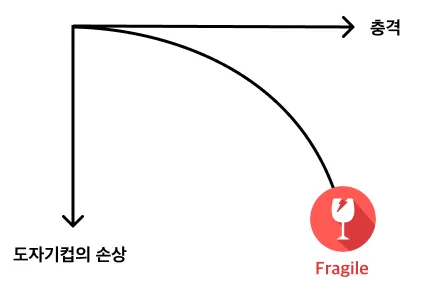
In other words, something fragile loses more than it gains over time in an environment with variability. It has more downside than upside—an undesirable asymmetry.
We often think of robustness or sturdiness—static qualities—as the opposite of fragility. Surely the opposite of being easily broken is not breaking? Strictly speaking, though, the opposite would be getting stronger as things break. Reflecting the graph above across the x-axis gives us the graph below.
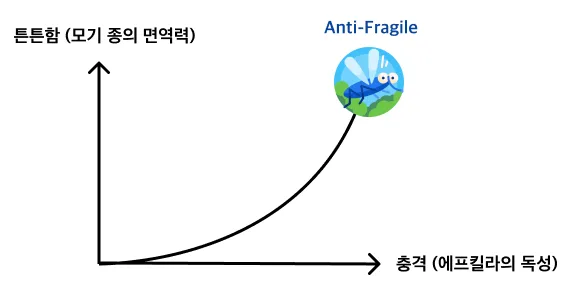
Hormesis is the beneficial effect of small doses of a toxic substance, as in the example of mosquitoes developing resistance to insecticide. It is a classic example of antifragility. Something antifragile gains more than it loses, has more upside than downside, and exhibits a desirable asymmetry.
Antifragility is not confined to living organisms. We can also find it in society, the economy, markets, and innovation. We need to examine what counts as a shock in these settings and how to deal with it.
Key 2. Randomness, uncertainty, and misguided intervention
Social and economic activity, markets, and culture are clearly human-made, yet they reach a stage of self-organization much like nature does. They are not organisms, but they resemble living things in the way they replicate and proliferate. Just as the sudden disappearance of a species can disrupt an entire ecosystem, interdependence is pronounced in complex systems. The behavior of each component can ripple through others. This interdependence is why the system contains fundamental uncertainty. In a complex system, uncertainty is unavoidable.
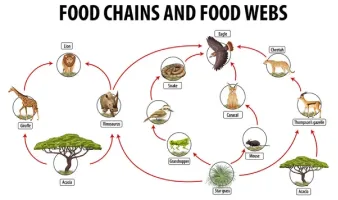
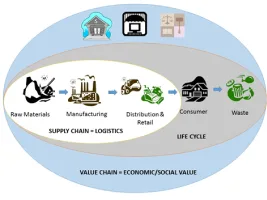
Trying to control such a complex system, or intervening clumsily, makes it fragile. An intervention aimed at a single immediate objective can have many effects throughout the system. We cannot be sure whether it will produce the intended result or something else. Doing everything possible to prevent forest fires, for example, can allow unseen combustible material to accumulate and eventually cause a much larger fire. Misguided intervention in a system we do not understand is not the right way to confront uncertainty.
Why, then, do people so often want to intervene? Uncertainty makes us anxious and stressed. These emotions probably emerged from our survival instincts. Combined with our distinct intellectual abilities, those instincts have made modernity a continuous effort to reduce volatility and randomness. Individuals began intervening to control their anxiety and stress, followed by more active intervention on a collective scale.
But as the forest-fire example shows, randomness and volatility do not simply decrease because we try to reduce them. Such efforts can actually make an antifragile system fragile. What methods, other than misguided intervention, allow us to become antifragile and benefit from uncertainty instead?
Key 3. Options and the barbell strategy
Suppose we join an early-stage startup and receive stock options allowing us, three years later, to buy 1% of its shares at today's price—a face value of 500 won. Since we chose the startup carefully, we presumably had a reasonable basis for expecting it to grow.
Three years later, the startup has not grown much. The difference between what we earned and the salary we could have received at a large company hurts a little. But it has not made life unmanageable. Perhaps the experience of working passionately through the night to create something that did not exist has taught us profound lessons. The stock options, meanwhile, have become worthless pieces of paper.
Now imagine the opposite: three years later, the startup goes public at a valuation of 1 trillion won, with further growth still expected. Exercising the options would yield roughly 10 billion won before taxes. Options have this asymmetric payoff structure: a small loss when nothing changes, and a large gain when change arrives. Exercising rationally chosen options is one antidote to uncertainty.
Another strategy for an unpredictable world is the barbell strategy. A barbell is thick at both ends and thin in the middle. The idea is to take positions at the two extremes rather than in the middle, which is actually fragile. At one end, we are extremely risk-averse; at the other, we embrace risk.
Applied to investing, the argument is that allocating 90% to robust cash and 10% to options with limited losses and almost unlimited upside in the event of a major change is a 'safer' structure than holding nearly 100% in moderately risky stocks. Taleb also invokes Ray Dalio's principle of making sure that an utterly unacceptable event has zero probability. He emphasizes that what ultimately matters is not probability itself, but the outcome we face.
Key 4. Via negativa
Finally, Taleb offers some wisdom for becoming antifragile. The simplest way to face uncertainty is not to add predictions about what will appear in the future, but to adopt via negativa: remove the fragile things that already exist. Time plays a crucial role in testing fragility. It acts much like uncertainty and randomness. Everything that has endured must have a reason for surviving. From this perspective, the old is superior to the new, because much of what is new will soon disappear. The book also brings up Steve Jobs as a more recent example of a similar idea. His words seem to capture part of the essence of via negativa.
Jobs describes focus not as saying yes to the work in front of you, but as carefully rejecting many other worthwhile ideas. He takes pride in what he chose not to do as much as in what he did, and sees innovation as the result of those countless deliberate refusals.
Conclusion
When I write about a book, I usually prefer not to summarize its contents. This one, though, needed a proper recap. There is still a lot I do not understand. Even so, putting it all together finally makes me feel ready to have a conversation with the author.
Within an antifragile system, the individual is fragile. I, too, am a fragile individual within the economy, society, and a company. Having run a business until last year, my failure probably contributed information that made the startup ecosystem more antifragile. For a system to improve, someone has to pay the price. From the system's perspective, failure is easy enough to accept. A country could even designate an Entrepreneurs' Day to express its gratitude. But we also need to look at the circumstances of the fragile individual.
Part of me worried that my failure was the result of my own inadequacy. I believed I had done my best, and spent a lot of time wondering why it had happened, without finding a clear answer. The book offered a small clue. According to Taleb, Americans do not regard failure as shameful; they see it as a reason to start again. In Japan, by contrast, shame surrounding failure encourages people to hide risks, whether in the economy or in nuclear power. Korea shares some of that cultural background. Perhaps it influenced me more than I realized.
If the pain of failure outweighs the benefits gained from it, the individual is fragile. I do not want to be that person. What matters is probably getting back up and calmly facing uncertainty again, informed by what failure taught me. To become calmer—to find practical wisdom that helps a fragile individual become antifragile—Taleb's experience as a trader may be useful.
Trading means living amid randomness and psychological pain that cuts to the core. Taleb says he composed himself every morning by imagining that the worst had already happened. The rest of the day could then bring only unexpected pleasure. Learning not to suffer from losses seems important. Like Seneca, who practiced treating his wealth as worthless when things were going well, this requires training. If that training succeeds, a world full of randomness will no longer affect me negatively. Eventually, I might become antifragile. It will probably take a long time—perhaps the rest of my life.
I still enjoy building new products. What my failed startup taught me is that the essence of what I wanted was to make products people love, not necessarily to do it through a startup. To keep doing that work, I will need both a barbell strategy that manages downside risk and options that let the recognition for creating those products come back to me.
To understand our existential priorities, the book suggests considering the difference between a wild lion and a captive one. The captive lion lives longer. If wealth and job security are what matter, it is also richer and more securely employed. I think I need a life full of disorder, adventure, uncertainty, self-discovery, and events that feel like shocks. That sounds more interesting.
Comments —