Intellectual Capital
“ I undertake a business only if a plan satisfies four criteria: Does it offer customer value? Can it make money? Does it have social significance? Can employees grow through it? There are many ways to make money, but I will not pursue one without social value.
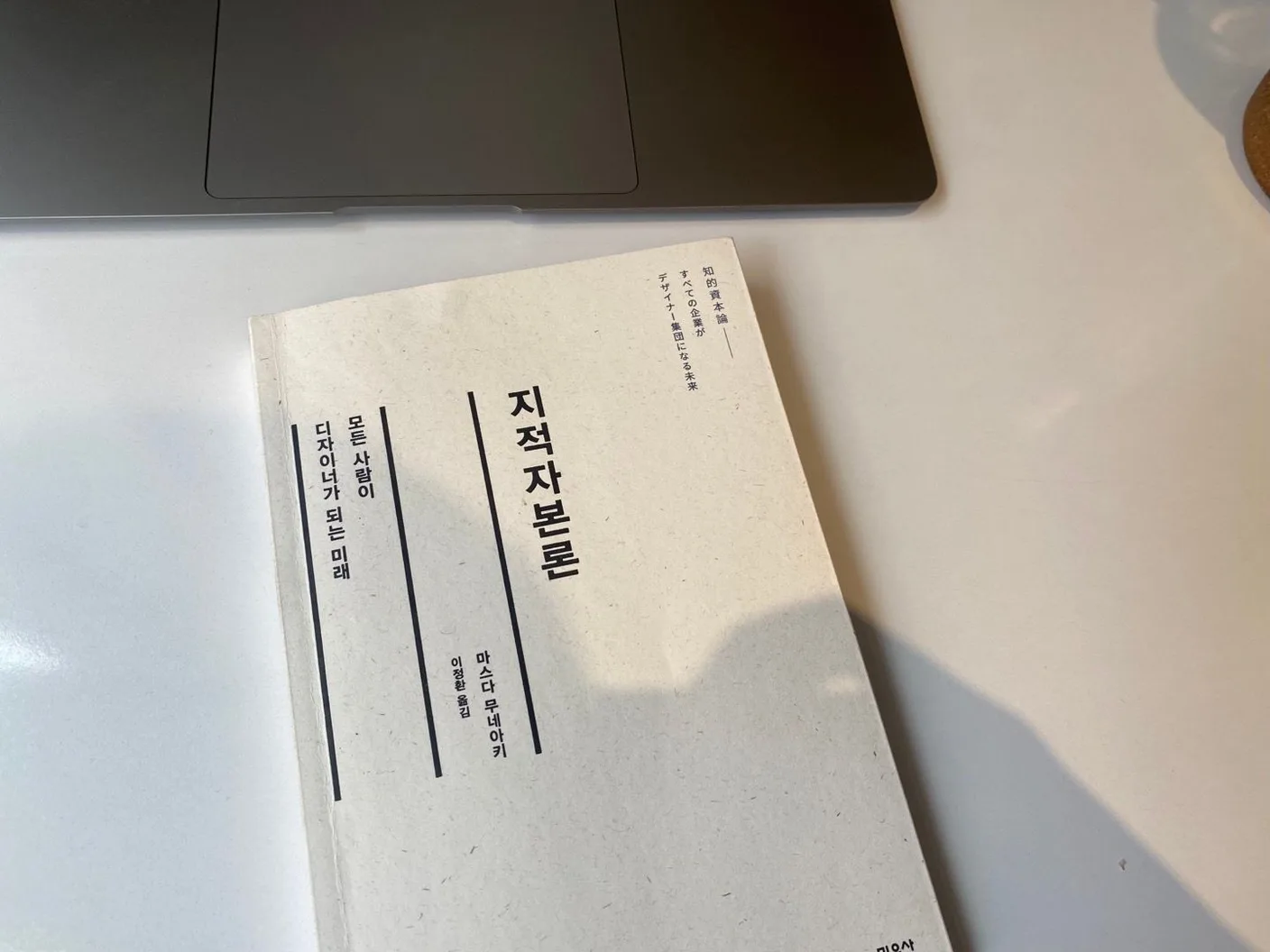
Chapter 1. Introduction: The Age of Intellectual Capital
Your proposals often seem heretical rather than conventional. How do you come up with plans whose horizons and direction differ from everyone else's?
Masuda: The answer is simple: think from the customer's perspective. For example, I don't think we should call a shop a 'place for selling.' That expression reflects the seller's perspective, even if sellers don't realize it. From the consumer's perspective, it should be a 'place for buying.'
Hiwatashi: When you actually try things, 95 percent fail. So if you're going to take a risk anyway, bet on the possibility of success—the opposite side that initially seems impossible, the remaining 5 percent. Pursuing that possibility with everything you have is what planning means to me. Failure alone cannot teach you. You need to experience success to learn.
Masuda: What Mr. Hiwatashi introduced, as I see it, was an expansion of the realm of freedom. Freedom means being able to do what you want and stop doing what you don't. Bob Dylan once described success as waking up in the morning and being able to do what you want to do.
Muneaki Masuda's Reflections
People easily confuse ends with means, and a means often becomes an end in itself. The fundamental reason we work is probably to become happy. Believing that happiness requires some financial security, we work to earn money. Here, happiness is the end and money the means. Over time, however, many people mistake earning money for the goal. Obsessed with it, they wear themselves down and drift further from happiness.
We confuse means and ends because it is easier. We say happiness is the goal, but continually asking ourselves what happiness means is difficult and exhausting. Unconsciously, we replace it with money, whose amount is easy to measure.
As I discuss in my conversation with Mayor Hiwatashi, being free is not easy. It is demanding and difficult. Being managed is much more comfortable. People unknowingly surrender their freedom and choose to be managed, but it is hard to expect genuine planning ability from employees who make that choice. That is why I ask employees to be free. It is a difficult path, but I am certain great joy awaits them at its end. Seeing your own plan become reality is that profoundly moving.
Muneaki Masuda's Reflections: The Nature of Freedom
Freedom is, in fact, uncompromising. It does not mean letting people do whatever they please. Mere indulgence and freedom are fundamentally different.
When you listen to reason rather than being distracted by instinct or desire, you naturally come to understand what you should do—your duty. Following that understanding is freedom.
Continually asking yourself how you should act and what you should do is both natural and difficult. That is why I call freedom uncompromising. But to move toward your dreams, you need to be free. Indeed, you must be free. Experience has taught me that.
Chapter 2. Beginning: Only Designers Survive
What in this world remains unchanged? Even the Asuka River turns yesterday's deep pool into today's shallows. Times change and society moves. You may once have led your field by a wide margin, only to find yourself suddenly at the back, following everyone else. Modern society continually tests how well we read the times. Without that sensitivity, dogma and prejudice arise. Once trapped by them, an organization slows down and loses momentum. What understanding of the times does Muneaki Masuda, whose proposals have anticipated their era, hold today?
01
The first thing I want to emphasize is that only designers can survive. That is the answer. Every company must therefore become a group of designers. Companies that cannot do so will not succeed in the business world ahead.
The essence of business activity is creation. This is not limited to manufacturing. If what we create is a product that generates profit, isn't design naturally important? The meaning of design in a product is changing rapidly, yet I believe few people seriously recognize that change.
Every product consists of two elements: function and design. Take a drinking glass. Its function is to hold liquid; its design is a glass object without a handle. Anyone who still insists that design is merely added value has not seriously considered how an object comes into being.
The attitude that design can simply be left to professional designers no longer works. If design is a product's essence, people who cannot participate directly in it are of no use in business.
02
CCC, where I serve as CEO, is a planning company. We create value by proposing more effective plans. But what makes a plan effective? How do we measure its effectiveness? A plan's value depends on whether it increases value for the customer.
What does the evolution of consumer society look like through the lens of customer value? The first stage is an age of scarcity. Customers value the goods themselves, so anything that serves its purpose can sell. As infrastructure and productive capacity develop, goods become abundant: the second stage. Products still anchor value, but customers need places to choose them—platforms. Whoever provides a more effective platform creates greater customer value. Consumer society has since advanced further. Now platforms themselves are abundant. This is the third stage. Simply providing a platform no longer increases customer value. What should we do next?
03
We need the ability to make proposals.
A platform is only a place to choose; customers still make the actual choices. After platforms, wouldn't customers value the skill of choosing? Someone who finds, selects, and recommends products that offer meaningful value to each individual customer.
That is why design matters.
Design makes things visible. It gives form to ideas in our heads and presents them to customers. Ultimately, design is another word for proposal. Proposing lifestyles is the role a planning company must fulfill. CCC's central philosophy comes down to two simple ideas: customer value and lifestyle proposals.
A fan of hard-boiled films may also enjoy Raymond Chandler's novels and want to listen to the mellow jazz their protagonists like. Then all those things should be available in one shop. That answer follows inevitably when customer value comes first. This, too, is design: making the idea of proposing lifestyles visible through an MPS, or multi-package store.
Financial capital once formed the foundation of a company. But as consumer society changes, that foundation must change too. No amount of money can generate proposals on its own. What we need next is intellectual capital. How much of it a company has accumulated will determine its survival.
From financial capital to intellectual capital. That is why I chose Intellectual Capital as this book's title.
05
The IT revolution has dramatically advanced communications infrastructure and increased productive capacity and productivity. Yet its influence on our lifestyles remains surprisingly limited compared with its potential. Consider commuters silently staring at their smartphones on trains.
Surely this cannot be the IT revolution's final destination. The transformation is still underway and will reach more deeply and broadly into our lives. Making each of those possibilities visible and presenting them through design is a planning company's mission. That is why we must become a group of designers.
Chapter 3. Development: Books Create a Revolution
06
What customers value is not the physical book but the rich proposals within it. We should sell those proposals. Instead, ignoring them and trying to sell the book as an object has created the crisis facing bookstores.
Categories such as magazines, hardcovers, and paperbacks reflect the distributor's perspective. Importing those categories directly into a store shows a failure to consider customers' desires. It becomes a place for selling rather than buying. Creating a lifeless space without the customer, who should be its central figure, and then lamenting that books and magazines do not sell is misguided.
CCC therefore rebuilt bookstore spaces around the proposals inside books rather than their physical formats. This is innovation in bookselling. Visitors encounter suggestions such as exploring a particular culture when traveling in Europe, or preparing everyday meals differently for better health.
Capital observes that even as productive forces grow, relations of production do not readily change alongside them. Eventually, those relations become fetters that restrict freedom. Likewise, unless a store puts customer value first, it becomes a place of constraint.
07
What obstacles arose while innovating at Daikanyama Tsutaya Books? Creating sections around proposals requires abilities far beyond those expected of ordinary bookstore staff. In the travel section, for example, they need to devise proposals that genuinely move customers, such as discovering Prague through art, and arrange books and magazines around those themes. This is sophisticated editorial work.
That is why intellectual capital matters. A bookstore that sells the lifestyles expressed in books, rather than the books themselves, requires the intellectual capital to make that innovation possible. In simple terms, a key measure is whether the company has accumulated the ability to make proposals. At Daikanyama Tsutaya Books, concierges embody that capital. Experts in individual genres decide everything from purchasing to store layout and put their own proposals into practice. How do we meet such people?
There is no definitive, established method. An encounter is a romantic idea because chance shapes it. Still, accepting the role of chance and good fortune, there is one thing worth adding: people with this level of expertise are not motivated by compensation and working conditions alone.
Those are only prerequisites. Beyond them, the key is an idea with enough attraction to make them feel that working on it would be interesting. They and I are connected in parallel, not in a hierarchy. Without that understanding, collaboration with outstanding experts is impossible.
Yes, the age of intellectual capital is the age of parallel organizations.
Chapter 4. Turning Point: Only Dreams Become Reality
11
Stepping slightly away from innovation, I want to consider what physical stores mean in the internet age. I, too, once reached a fork where I had to decide whether to move toward the internet or the physical world. It happened at the turn of the twenty-first century.
CCC had launched TSUTAYA online, offering cultural content over the internet. It was 1999, the year before Amazon entered Japan. Had we committed all our management resources to the internet then, we might have dominated Japanese online retail. Why didn't we?
At the time, I did not fully foresee how quickly the internet would evolve and permeate everyday life. But even if I had, I would not have specialized solely in online business. To me, planning meant finding ways to create and express the appeal of physical stores in the internet age.
Today CCC is a planning company operating both online and in the physical world. That combination gives physical stores their own value, which I want to consider more seriously. Or, to be honest, perhaps I simply prefer real spaces filled with living people whom I can brush shoulders with.
12
In the future, the only physical retailers that survive may be stores operated by internet companies. That may sound odd after saying I like physical spaces, but let us think seriously about their future.
The first difference is floor space. Physical stores have limited room to display products. To increase returns in that space, they cannot afford to keep items that do not sell, so their assortments tend to become conventional and uniform. Virtual stores have no such display limit. They need warehouses, but those costs differ enormously from the cost of building physical stores. Online retailers can also offer comprehensive assortments of available products, making the difference in customer value even clearer.
That does not mean every physical shop will disappear and all purchases will move online. Planning always begins with a firsthand, visceral sense of things. To understand what customers want and what will increase customer value, we need a place where we can see their faces—not figuratively, but literally.
Physical retail must therefore earn its place by drawing on stores operated by internet companies. Combining enormous information-processing capacity and low-cost inventory management with thoughtfully planned physical customer touchpoints gives stores the potential to create new customer value.
13
Does the physical world have any advantages over the internet? I have described stores' functional value as customer touchpoints. But beyond their operational significance, where can the physical world outperform the internet in terms of customer value?
After thinking about it, I found that the physical world still has clear advantages. One is immediacy. Same-day delivery is expanding, but online purchases cannot be obtained the instant you click; there is always a wait. Few people order fresh ingredients online every time they want to cook immediately. Products that lose value unless obtained right away are not well suited to online retail.
Another advantage is directness. Consider libraries. Their collections can use open or closed stacks. With closed stacks, books are stored in areas inaccessible to visitors, and librarians retrieve requested titles. Open stacks display books on publicly accessible shelves. Before its renovation, roughly half of Takeo City Library's collection was in closed stacks. It is now open.
We wanted to preserve the simple wonder of encountering a vast number of books firsthand. First-time visitors to the renovated Takeo City Library invariably exclaim in amazement. The enormous collection covering the broad wall before them is overwhelming. The sheer quantity of books speaks directly to visitors' senses.
Immediacy and directness are two advantages the physical world currently holds over the internet. Convenience stores pursue immediacy to its limits; huge shopping malls clearly embody directness. But are convenience stores, shopping malls, and online shopping alone enough to make people feel their lives are rich?
Something of the heart is missing. Perhaps innovation still has room to emerge in something that cannot be explained by logic alone. That thought led me to the keyword comfort.
The internet is far removed from the sensation of comfort. Financial capital creates and maintains infrastructure such as water systems, railways, and internet networks. Beyond that, designing comfortable moments and spaces is possible only through intellectual capital. These endeavors arise from intellectual capital, which is why we can call them innovation.
Changing the concept of a station building also changes the station itself. JR alone has roughly 5,000 stations across Japan. Imagine each becoming a cafe or park that offers people comfort. It would be a quiet but unmistakable revolution—a lifestyle revolution.
13
Through books, films, and music—the 'software' of culture—TSUTAYA, including Daikanyama Tsutaya Books, has proposed lifestyles. If that is possible, why not make proposals through physical objects, or 'hardware,' too? A specific example prompted the thought: the iPhone.
When Steve Jobs created this world-changing tool, perhaps what he wanted to say was: let's communicate more. That was a lifestyle proposal, embodied by the iPhone. Jobs was not simply trying to sell an object called an iPhone; he was proposing a lifestyle through it.
Objects themselves are inherently local and selective. That is why marketing exists. Sales plans identify a target and appeal to it. But when an object goes beyond being merely an object and carries a philosophy—a lifestyle proposal—it gains the ability to transcend borders, races, generations, and genders.
CCC therefore reorganized its stores around lifestyle proposals. Sections with themes such as enjoying films, relaxing at home, and creating connections make more specific suggestions, displaying the appliances that enable them across conventional product categories.
Apple Stores sell iPhones, iPads, and Macs. Despite offering only about three product families, they are always crowded because customers are drawn to the lifestyle Apple proposes. They show which things are needed to make that lifestyle possible. If we, too, can offer more than a hundred proposals that resonate with contemporary urban residents, innovation will follow.
14
T membership stood at roughly 50 million in July 2014—one in every 2.5 people in Japan. The card grew from a deeply personal experience. We began the points service in October 2003. Until then, my wallet was packed with loyalty cards from different stores, and whenever I needed one, I struggled to find it.
That made me wonder how convenient it would be to use a single points card at every store. Of course, no such dream card existed then. But giving up because something does not exist means nothing can begin. If it does not exist, create it. People laughed at me for chasing something so dreamlike.
On reflection, that criticism is stranger still. Only dreams can become reality. Innovation is the appearance in the real world of something someone dreamed of. Something no one has ever dreamed cannot be realized. Thus, a card that began with one person's intuition—Muneaki Masuda's—grew fifty millionfold. An astronomical rate of growth.
Next, we must develop this into database innovation. T Points must enter a new phase by using the data this system produces to infer customer profiles. Because it spans industries, points analysis can reveal patterns such as where people with certain musical tastes tend to eat breakfast. It can depict customers in multiple dimensions across the boundaries between music and food. A sample of a few dozen or hundred people would not suffice, but fifty million changes the picture. Why make these inferences? For better proposals, of course.
The third stage is the age of proposals. How accurately a business can make suggestions to customers determines its success. In the second stage, building a platform and displaying products was sufficient. The relationship was one-to-many: a single solution could address the needs of many unspecified customers. At the proposal stage, that no longer works. Proposals fundamentally require a one-to-one relationship. Concierges were indispensable to all four innovations because they entered those one-to-one relationships to offer each person a precise proposal.
Seen this way, database innovation means making intellectual capital an open resource. The plan to expand these four innovations nationwide does not arise from CCC's self-interest. We believe they can help revitalize local communities.
You have probably heard the phrase big data. If its value can return to the communities where we live in the form of revitalization, could there be a better use for it? When that happens, the card innovation that began with one person's annoyance at a bulging wallet will finally have reached one of its goals.
That is what I am thinking about now.
Chapter 5. Conclusion: A Company's Form Is Its Message
18
What kind of people should make up this human-scale company? The answer is simple: they must be free. It is not a hierarchical organization. Its members connect in parallel, pooling their individual strengths to increase the whole's capability—a cloud-like conception. Only people free from the constraints of vertical relationships can form such an organization.
Being managed by someone else is actually more comfortable. Freedom is unnecessary there. You need not shoulder freedom's difficulties. You simply follow your manager's instructions and report, communicate, and consult properly. But in a human-scale, cloud-like parallel organization, you cannot remain in the serial relationship of boss and subordinate. You must use the database—the company's intellectual capital—to devise plans freely.
In hierarchical relationships, people often face one another. A human-scale organization is different. Because employees relate in parallel, they are fundamentally colleagues, not bosses and subordinates. Colleagues stand alongside one another and look in the same direction. Naturally, that direction is toward the customer.
19
Come to think of it, few things are as inefficient for humans as nature. Plant a tree and you must clean up its fallen leaves every autumn and prune its branches before summer. Yet the breeze through that grove is refreshing, and sunlight filtering through swaying branches is beautiful. I wanted to create a place in Daikanyama where people could feel nature, because I thought that was closer to happiness.
Just as intellectual capital cannot appear on a balance sheet, this freshness and exhilaration cannot be measured numerically. Perhaps these unquantifiable sensations are closer to happiness. Of course, I am not asking members of a human-scale organization to deliberately work inefficiently. I am saying efficiency should not be the sole measure. It is not the goal, merely one aspect of the result. We should not pursue it as our starting point.
20
The name Culture Convenience Club clearly shows that my thinking has not changed in thirty years. But I have another piece of evidence. Let me share it.
In the transformative 1980s, I want to open a shop in Hirakata, Kansai's largest commuter town, based on the idea of a culture convenience store. It would make culture easy to enjoy, offering records for rent, books as sources of lifestyle information, and videotapes, including rentals. Conveniently located near the station, it would stay open until 11 p.m. An inexpensive loft-style interior would make it a hub introducing Hirakata's young people to the lifestyles and information of the 1980s. Its name would be LIFE INFORMATION CENTER 'LOFT.' After opening, I would also like to explore ticket reservations and information, rental housing services, and interiors. I hope it becomes a center of youth culture and a catalyst that turns the street from Hirakata Station to Izumiya into a place of communication, like America's West Coast. (Quoted as written in the original.)
I wrote this statement of founding intent in 1982, when I was thirty-one, to recruit investors for the shop that would become the foundation of TSUTAYA. Nearly every element of today's business was already in my mind at thirty-one.
Making promises is easy; keeping them is difficult. Gratitude is necessary to accomplish that difficult task. Few people have enough willpower to keep promises without it.
Freedom: the freedom to do what you love with people you like. Gaining it requires trust. By keeping promises and remembering gratitude, we earn trust. Only by continually working to become that kind of person do we earn the right to be free.
Chapter 6. Epilogue: Byproducts Bring Happiness
Recently, I have often thought about byproducts. Like the European enthusiasm for ukiyo-e prints that had been used to wrap ceramics, unintended, accidental events change our lives. Perhaps the world moves through the repetition and accumulation of such events.
Something we create produces outcomes beyond our intentions, which then produce something new. I opened Tsutaya Books Hirakata in 1983. My way of thinking has hardly changed since. The founding intent I wrote more than thirty years ago still matches the businesses I pursue today. It has remained consistent and unwavering.
I believe byproducts are given only to people who create something. That is natural: without a product, there can be no byproduct. You could call a byproduct good fortune—the fortune of encountering an outcome beyond what you intended. Zero multiplied by anything is still zero. Only by creating a one can you obtain a new result.
If this book helps readers—especially young people who hope to start businesses—create their own 'one,' I will feel proud as an author to have done something meaningful.
Comments —