The Night Bus to Pokhara
Episode 2: The Night Bus to Pokhara
It is the day before I leave for the Annapurna Circuit.
I have not written an update since Thamel. So much has happened. Two days felt like two weeks: the utterly chaotic night bus, meeting Sean, Cham, and Philipp, reaching Windfall safely, and an impromptu paragliding trip. There were many spontaneous experiences I would have missed if I had started trekking today. If I had followed the itinerary of the people I met at the guesthouse, I would have left today, Sunday, December 4. But several things worried me, so I chose to rest and prepare for one more day. I think not rushing was the right choice.
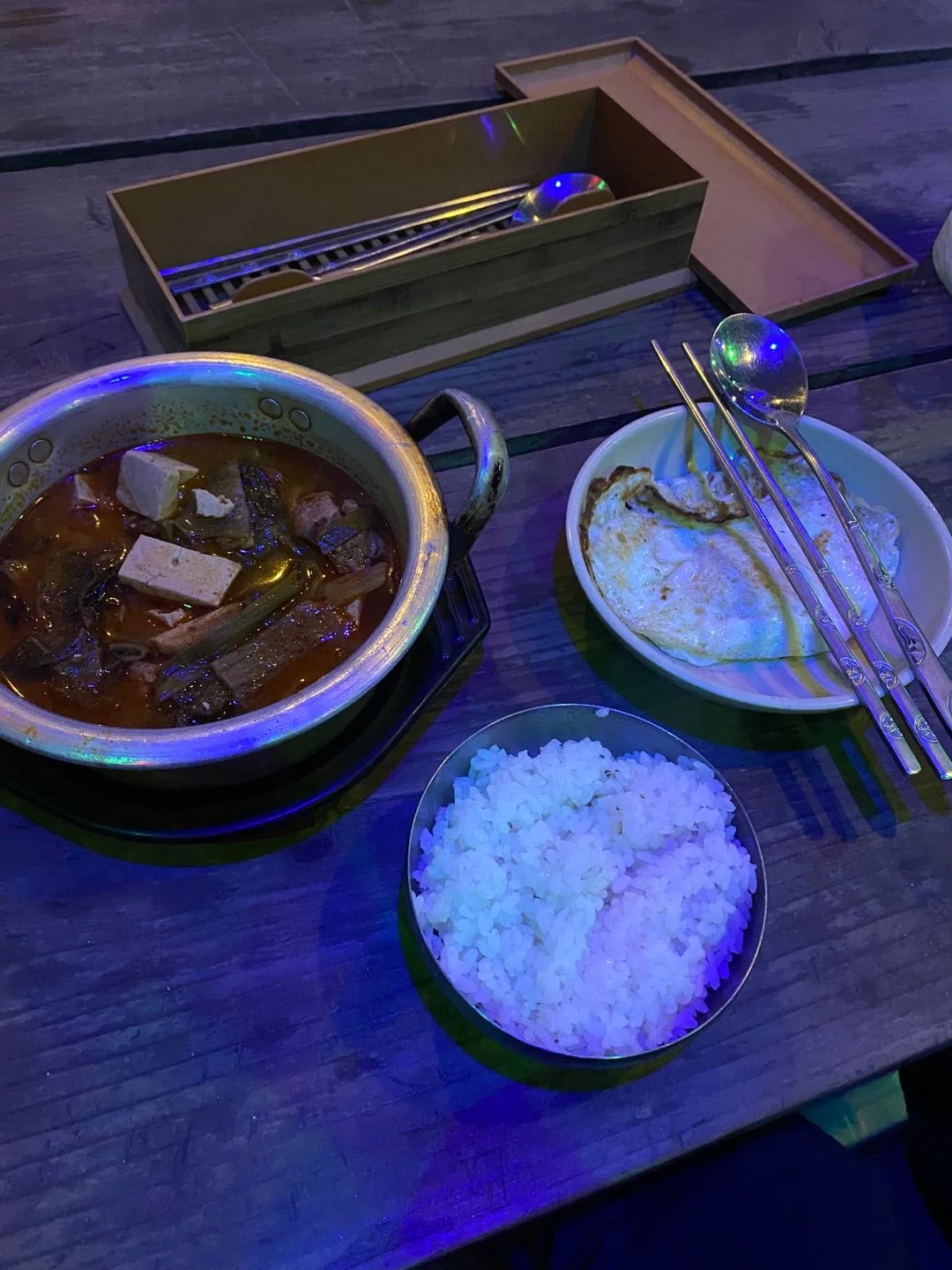
First, the journey to the night bus. Before setting off, I ate the kimchi stew Gillian, the owner of Chukje, had made for me. Chukje is a Korean restaurant run by Gillian, a Nepali man who worked in Korea for many years. The stew was far better than the one at the kimchi-stew restaurant near my home. The spring-onion kimchi made an extraordinary broth. Perhaps it tasted even better because I had spent two days eating greasy food and sleeping wherever I could. I wolfed down two bowls of rice and went up to the roof for a cigarette.
I had no idea what a bizarre journey awaited me.
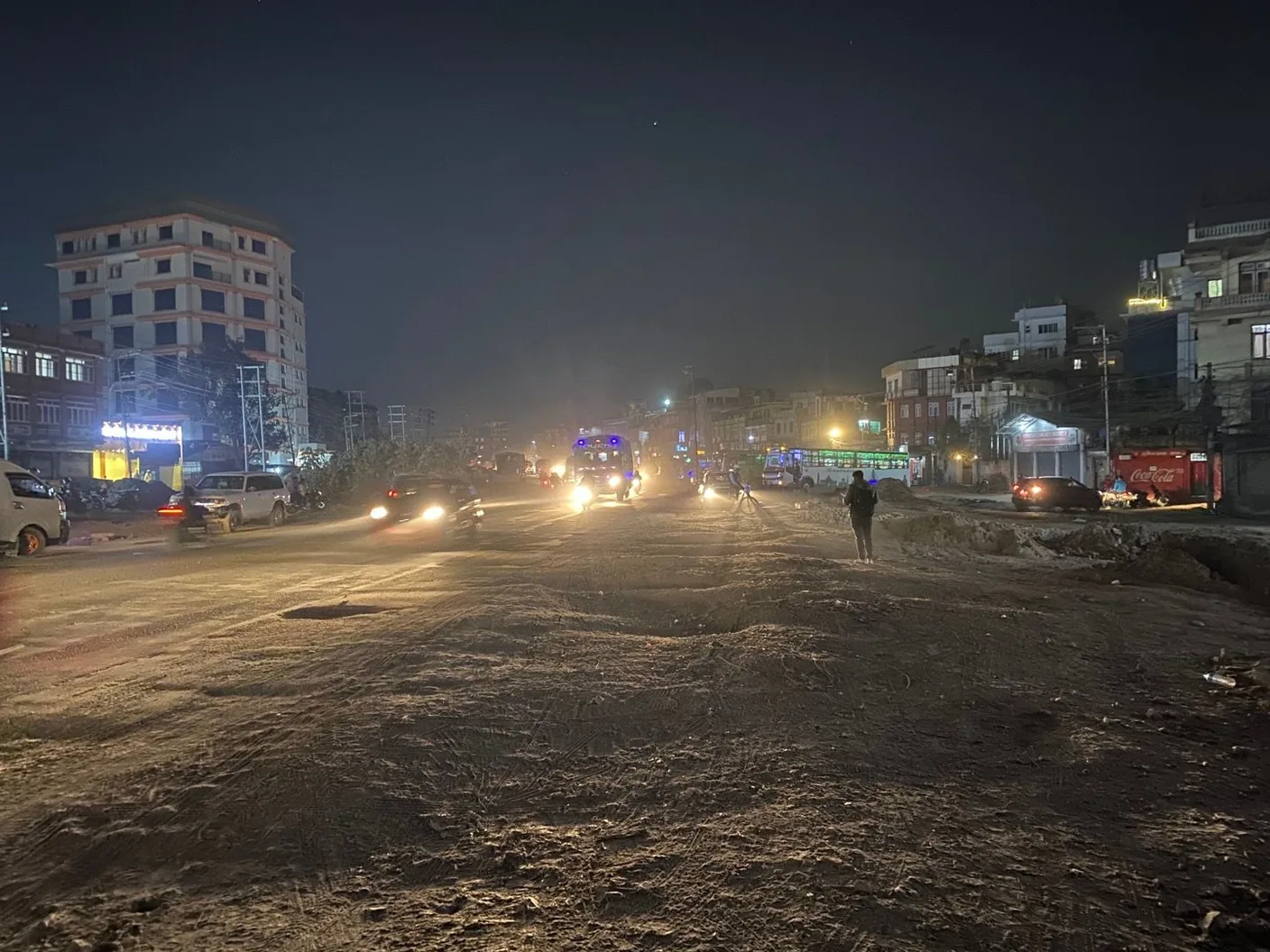
After a brief conversation with Gillian, I headed for the night bus. The walk there was pure chaos. At first, there was at least a pavement, so I could get along reasonably well while struggling under my bags. I remember passing a loud traditional wedding along the way. In any case, the streets were unbelievably noisy and confusing, and I walked nervously, hoping no one would approach me. After crossing a river, just when I thought I was almost there, I came to the main road that would cause all the trouble: a large construction site alongside what looked like a four-lane road.
The first challenge was crossing it. There was not a single traffic light or pedestrian crossing. As far as I remember, I eventually followed closely behind someone else to get across. Then I walked another seven or eight hundred meters through an area that felt unsettlingly rough. People were gathered around fires—drifters, homeless people, or construction workers. I still do not know which.
The road had crumbled away. It looked like a street in a world approaching its end. Yet, strangely, it did not feel unpleasant. Perhaps a little fear and vigilance made the fact that I was traveling feel more immediate. I finally reached the Bhat-Bhateni Store, where I had been told the bus would stop. Desperate for a bathroom, I ran up to the fourth floor, only to discover that the bathroom was outside. Damn it. Afterward, I asked a police officer where to board the bus. He seemed to say I could board in front, so I stood by the road outside the store. I had not understood properly. He probably meant the other side of the road.
Still, something felt wrong. The seven o'clock departure time was approaching, and I had no further information. Then a Nepali man on a motorbike spoke to me, asking where I was from. Why does everyone ask whether I am Chinese first? Do I look Chinese? I was sure he would ask whether I wanted a motorbike ride. 'Korea,' I answered firmly. In short, I did not want to continue the conversation. When he asked where I was going, I answered just as firmly, 'Pokhara.' Short answers, one after another. Then he told me to board on the opposite side.
Seeing that I was still suspicious, he asked to see my ticket. I handed it over while keeping a tight grip on it with one hand. He repeated that I needed to go to the other side. When he asked the departure time, I said seven. The clock read 6:57. He insisted it was the opposite side, and I finally crossed. I felt halfway doomed. What if I missed it? That seemed entirely plausible: I was in the middle of nowhere, with no idea where or how to catch this bus. I had trusted the words of a suspicious, swaggering man on a motorbike and crossed the road—partly because I was afraid he might bother me if I refused.
As thoughts and worries raced through my head, a member of staff checking bus tickets approached me. I was saved. The night bus to Pokhara really did stop opposite the store. At that moment, the 'swaggering guy' became the 'kind Nepali man.' I relaxed a little and even had a cigarette. While waiting, I began to hear loud English conversation nearby, along with the unmistakable sound of someone filming Instagram stories from the moment they arrived.
Entirely unconcerned with what anyone thought, they were Sean, Cham, and Philipp.
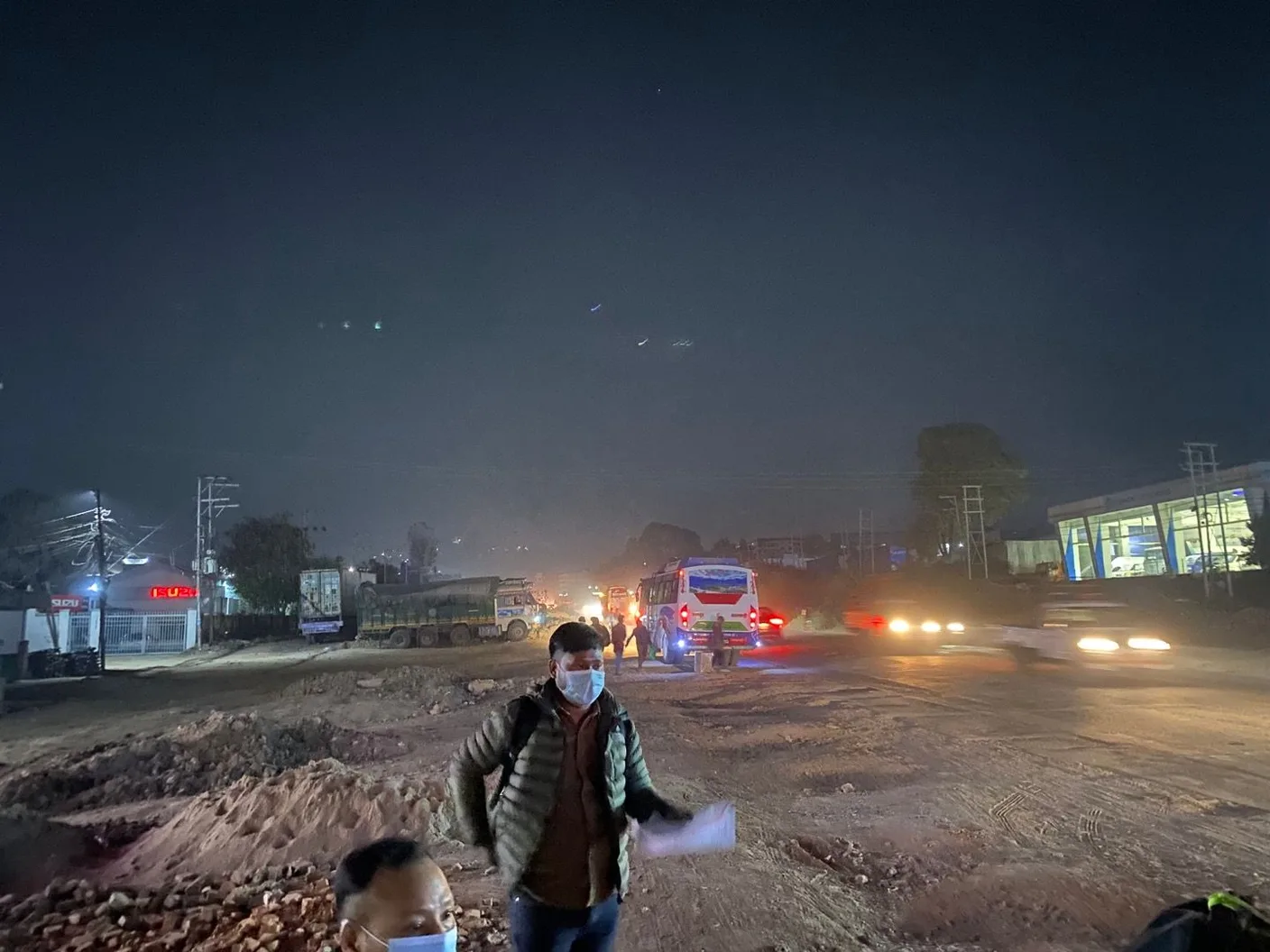
The loudest of the three was Sean.
Having forgotten that particular Western energy for a while, I felt it at about twice its usual intensity. As I stood there blankly, Sean was the first to ask, 'Are you going to Pokhara?' When I said yes, he announced, 'Guys, we finally did it. We found the bus station!' and put that on Instagram too. The other two, Cham and Philipp, looked on as if this were perfectly normal. We naturally ended up standing together, and Sean asked where I was from. Once I said Korea, the conversation with the three of them really began.
They were medical students who had come to Nepal to volunteer: Sean and Cham from Melbourne, Australia, and Philipp from Germany. They seemed to have completed their undergraduate studies and to be at something like an internship stage. They were twenty-four, and Philipp twenty-five. One funny detail was that Sean had been born on January 7, 1998—exactly one day before me, January 8. He made so much noise about this that I thought if he died, his mouth alone would keep floating around. Of course, I loved that cheerful energy. After a long stretch of talk about our ages, and Sean's nonsense about why parents so often conceive children in March, there was finally a lull and I began talking with Cham.
Her parents were Korean, and she seemed to be a second-generation Korean Australian. Her Korean name was Kim Cham-mil, though I am still not completely sure; if we meet again, I should ask her to write it down in Korean. She was studying medicine at the University of Melbourne. After talking in English for a while, I asked whether she spoke Korean. She did. She said she was not very good at it, but expressed everything fluently. Her younger sibling had been an exchange student at Korea University, and she had visited Korea too. As I understood it, her parents had emigrated to Australia when they were about nineteen or twenty, and she had been born there. So, yes, Cham was Korean too.
Sean had a Korean girlfriend. Like Cham, she was born and raised in Australia after her parents emigrated there, though I gathered that her parents had spent much longer in Korea. Her name is Jenny; I met her and Sean in Gangnam on January 1. They made a good couple—she could keep talkative Sean in check. Finally, Philipp. He was from Germany. I heard which university and region, but the names were too difficult and I forgot them. He was much quieter and calmer than the other two, though underneath that calm he was an endearingly eccentric little robot.
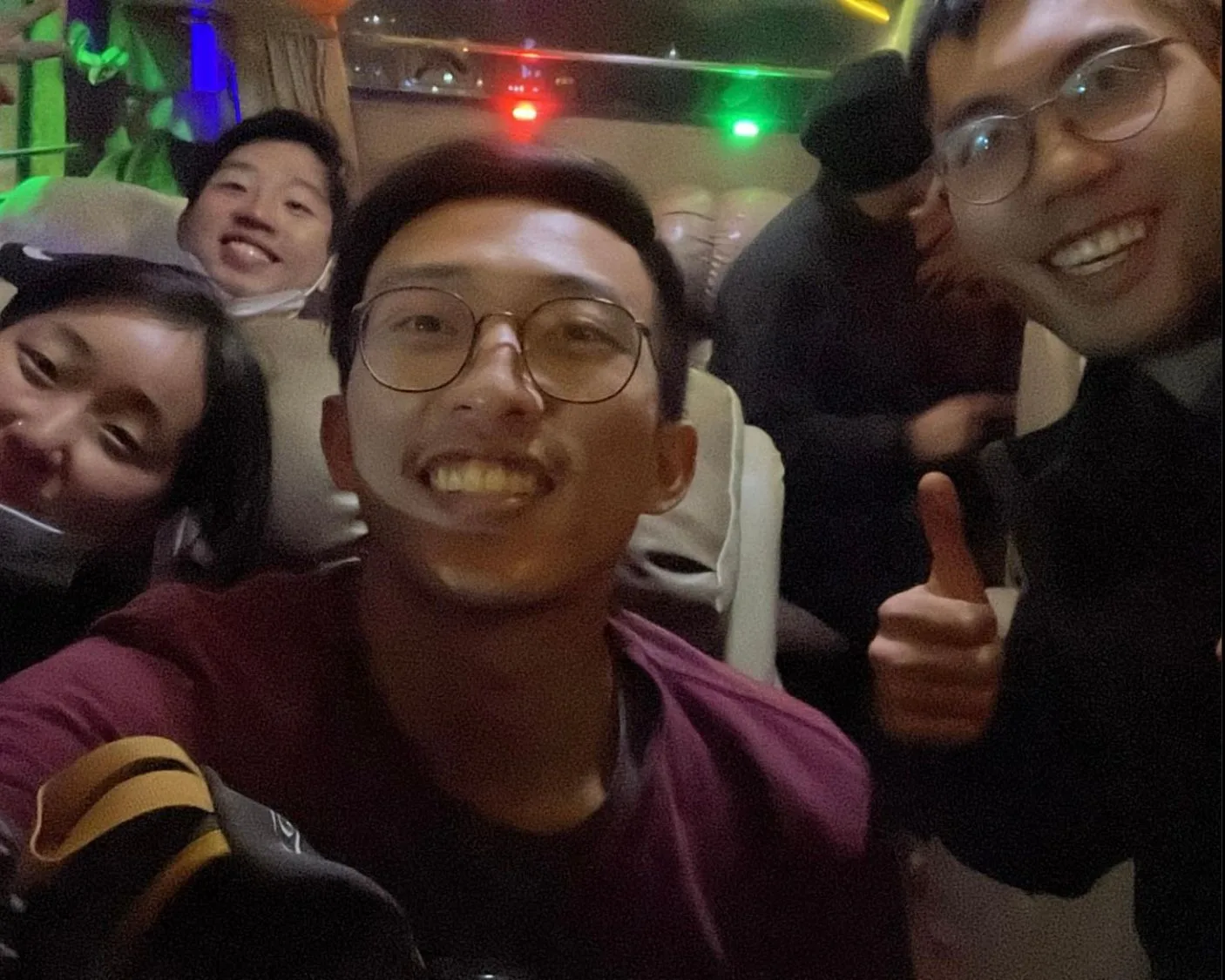
Their combination was incredibly appealing: Sean, the nonstop comedian; Cham, with her unmistakable international-student air, occasionally looking at him with exasperation; and Philipp, quietly dropping in a comment from time to time. Together, the three were lovely and charming. After about half an hour of conversation, a bus finally arrived. I loaded my bags, only to discover five minutes later that it was the wrong bus. I urgently asked them to take my bags out and managed to recover them. Even now, that moment makes me shudder. Eventually, we boarded the chaotic night bus.
For the first hour, I was certain I would never be able to sleep on that bus. So I took out Somerset Maugham's The Razor's Edge and began reading. Around the time I finished it, Korea's World Cup group-stage match against Portugal began. My mobile connection kept dropping, and Naver had blocked viewing from overseas, so I followed only the text commentary. Korea won 2–1 and advanced to the round of sixteen. It was an unbelievable result. I celebrated silently to myself. At around eleven or midnight, roughly three hours after departure, we stopped at a rest area.
Philipp started a conversation, and we talked quietly and calmly. Mostly, we discussed trekking. He said he was also setting off on a trek to EBC, Everest Base Camp. We talked about our trekking and travel plans, while Sean continued filming Instagram stories nearby. After about ten minutes, we got back on the bus. And I fell asleep, disproving my own certainty.
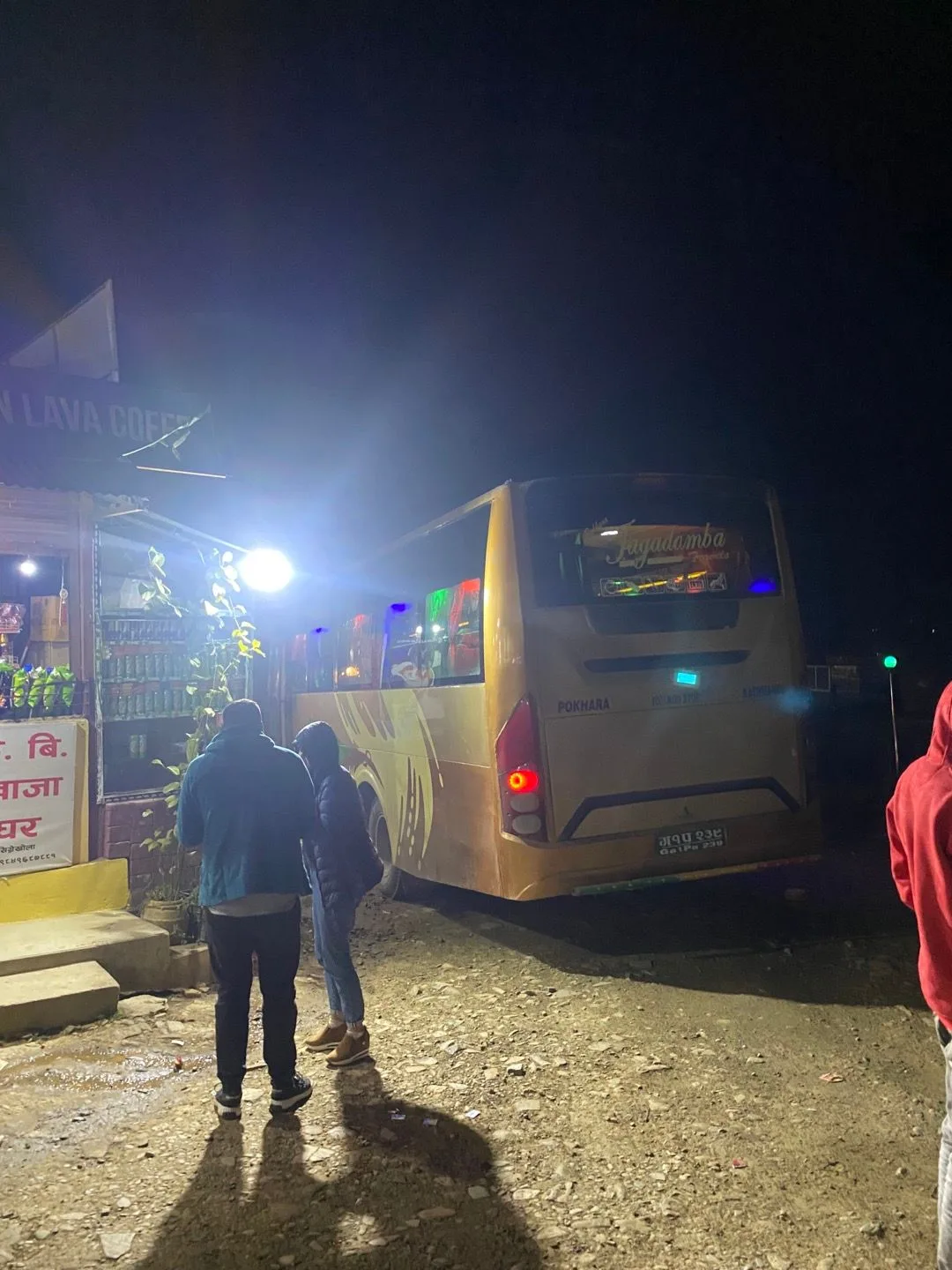
I woke whenever we stopped at a rest area, about every two hours, but still slept for roughly six hours on that shaking bus. Even more astonishingly, Cham had fallen asleep about half an hour after departure and slept all the way through. I wanted to ask her secret, but held back. At around 5:30 a.m., the bus reached Lakeside in Pokhara. We talked a little there, then realized we were heading in opposite directions. We followed each other on Instagram and parted. They were going straight to Australian Base Camp that day, and we agreed to have dinner together that evening if we could.
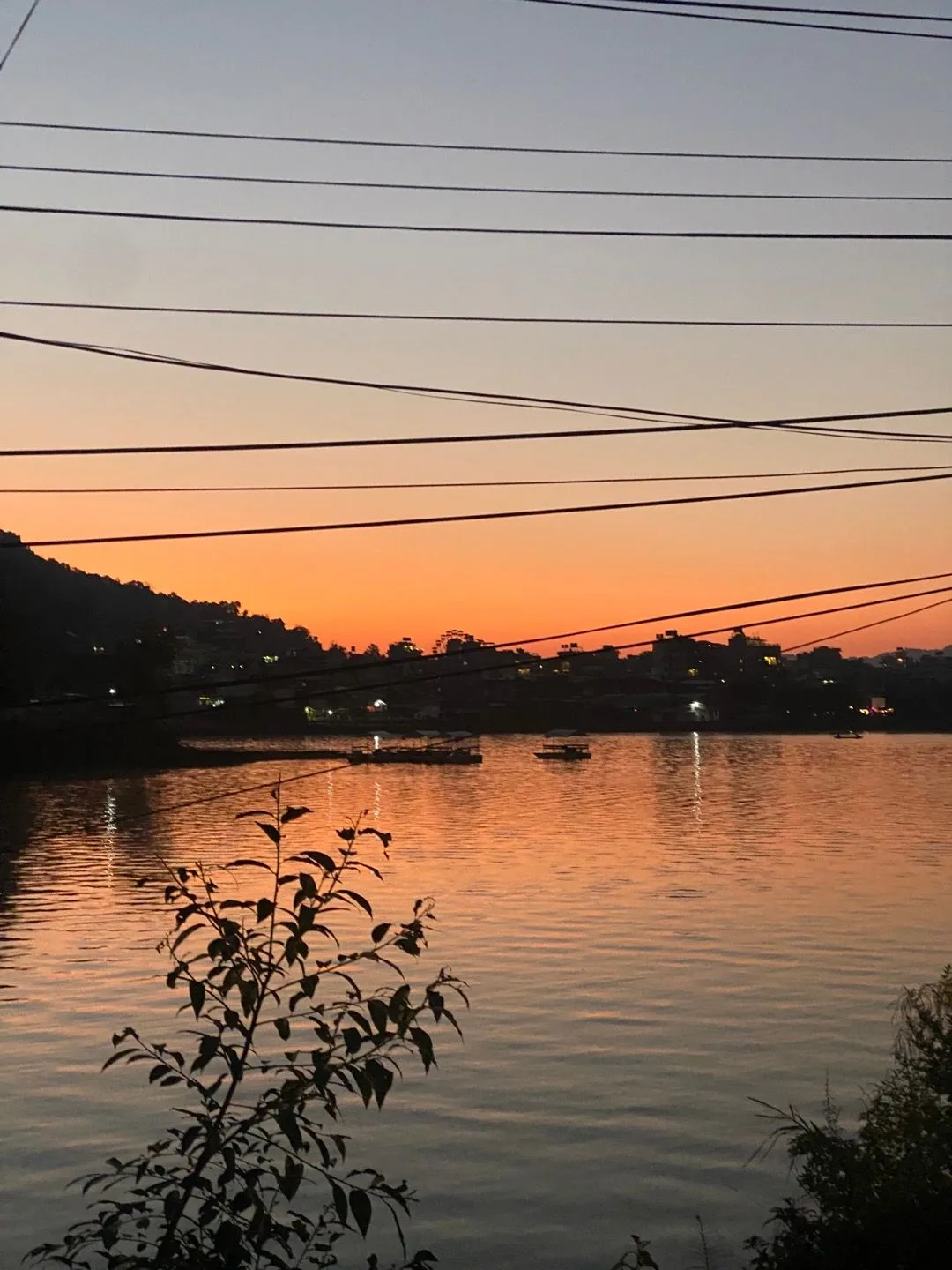
I headed straight for Windfall. All the shops were closed in the dim early morning, and it was a little chilly, somewhere between five and ten degrees Celsius. After about fifteen minutes of walking, I found Windfall easily enough—but its metal shutter was down. Shit. Still, at least I had found it. I decided to wait on a lakeside bench nearby and watch the sunrise.
At around 6:40 a.m., Windfall opened its doors.
Comments —