The Chaotic Streets of Thamel
Episode 1: The Chaotic Streets of Thamel
I boarded a flight to Nepal.
How do I feel? Mostly, equal parts excitement and fear. I am excited to rediscover the feeling of being a stranger, forgotten in a foreign country, and afraid of the unknowns I will have to navigate. Sleeping in the airport. Finding Thamel. Booking a night bus to Pokhara, then getting from Pokhara to Windfall. And, beyond all that, facing the question of what I should do with my life.
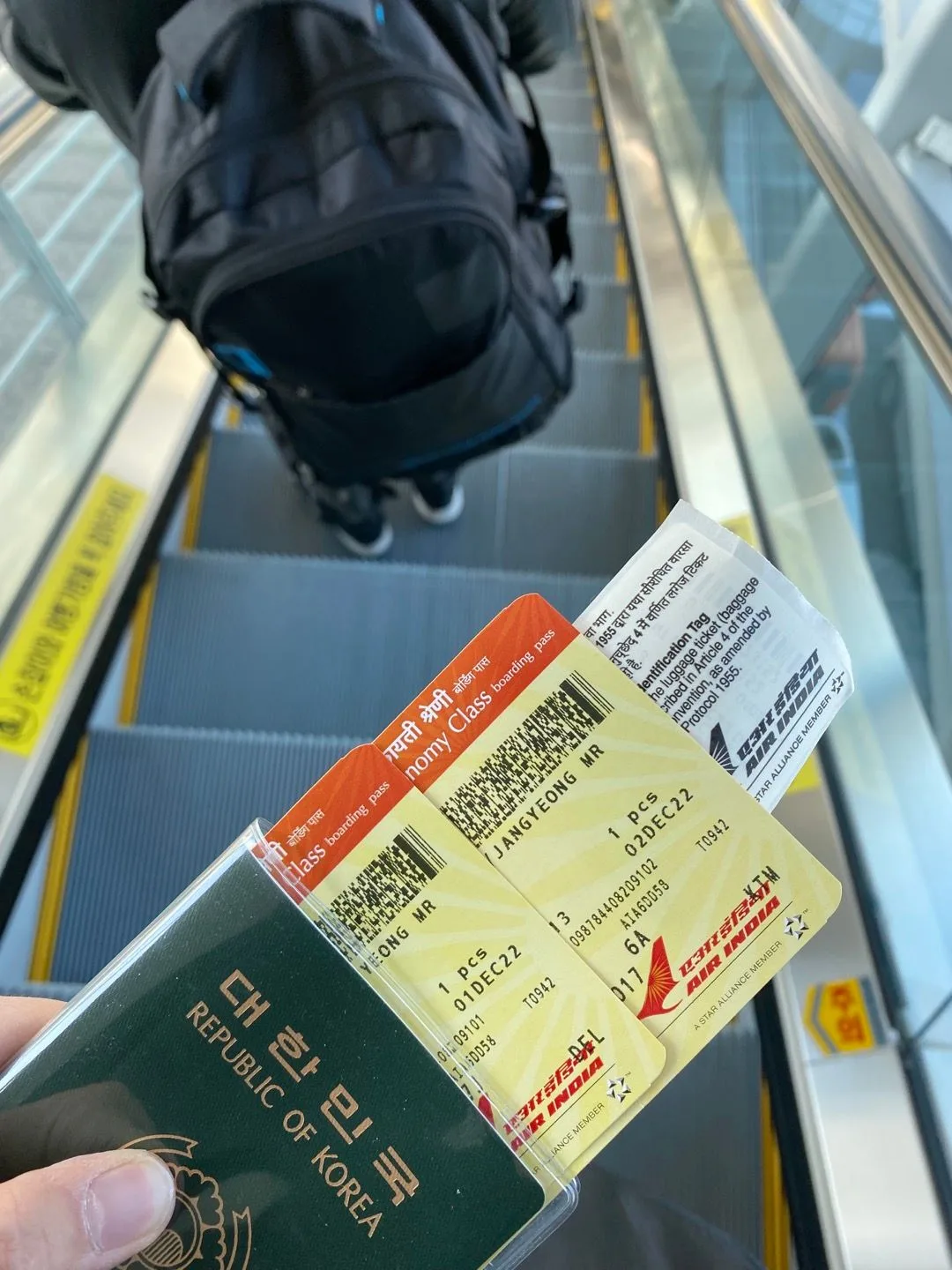
What do I want to do? Is that even a question I can hope to resolve in my head? As I boarded the plane, I promised myself to find only a broad direction—not the details, just something as general as north, south, east, or west. A wider range of experiences might expand a person's options, or the limits of what they can do. So if there is something I want to try, I should try it without hesitation. That takes a great deal of courage. I become conscious of what others might think—though they probably are not very interested in me—and fear creeps in. But I have to try. Otherwise, I will be left with regret. The question, of course, is whether I will find an answer at the end of it.
I do not regret trying to start a company this year at all. I have no lingering sense that I should have done something differently. I am simply ashamed that I failed to produce a result, and anxious about what comes next. The strange thing is that even though I did my best and could not have done more, the shame remained. Why? I took a closer look at the feeling. It was a mixture of a little arrogance and guilt: the arrogance of refusing to accept that I could not be good at this from the start, and that shortcomings were inevitable; and guilt over losing a large amount of investment money. Those two feelings had combined into a new one—shame—and were tormenting me. I understood what the lingering emotion was, but still did not know how to deal with it. Hoping to find a hint, I opened the Somerset Maugham novel I had brought from Korea and began to read.
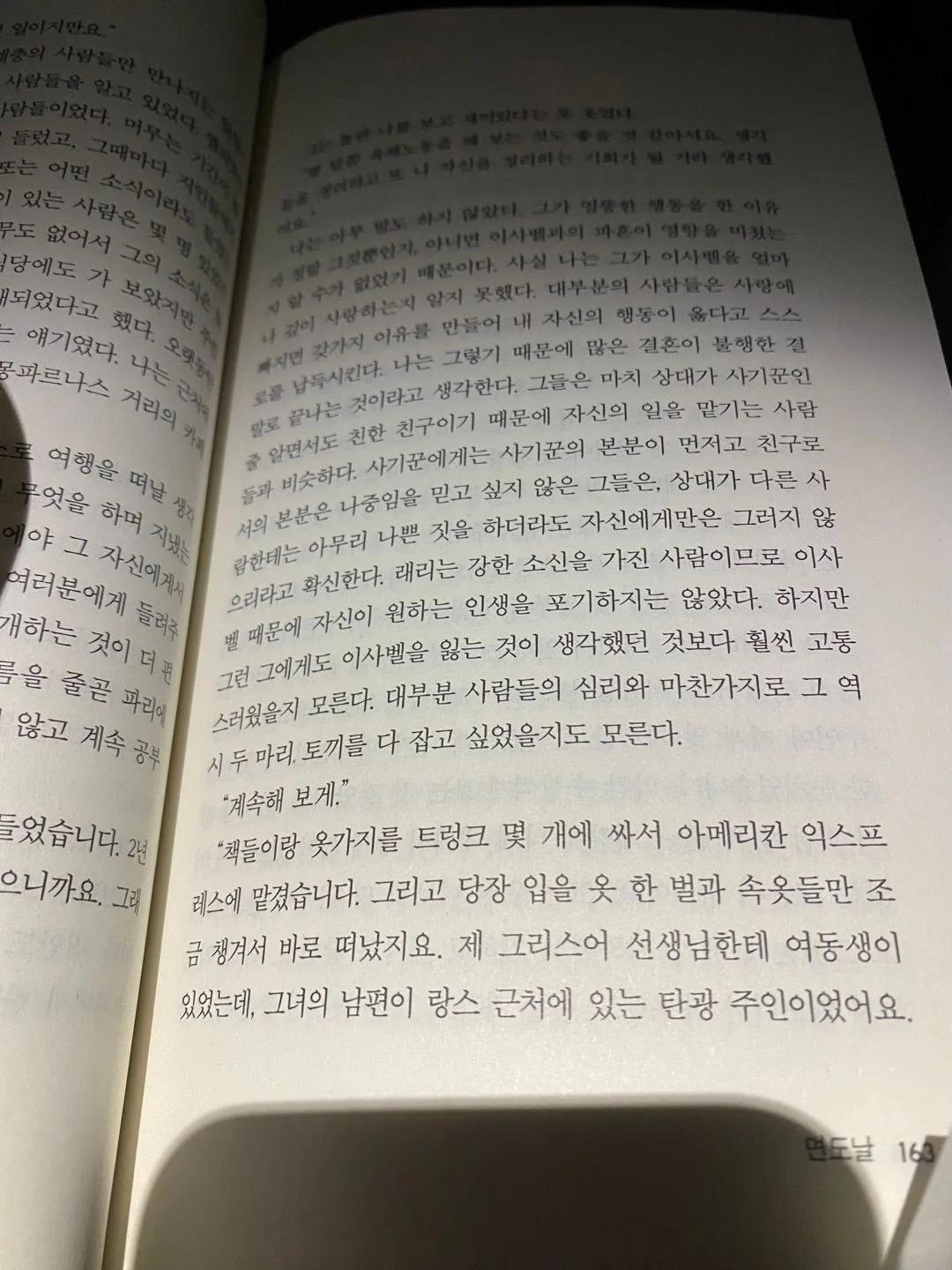
By the time I looked up from the book, we had arrived at New Delhi airport in India. After wandering around for about an hour, occasionally glancing at the other Koreans nearby, I am now passing a fourteen-hour layover. Tomorrow's schedule worries me a little. I need to land at Kathmandu airport, enter Nepal, make my way to Thamel, and work out how to get to Pokhara. Two main quests: 1. Get to Thamel. 2. Get to Pokhara.
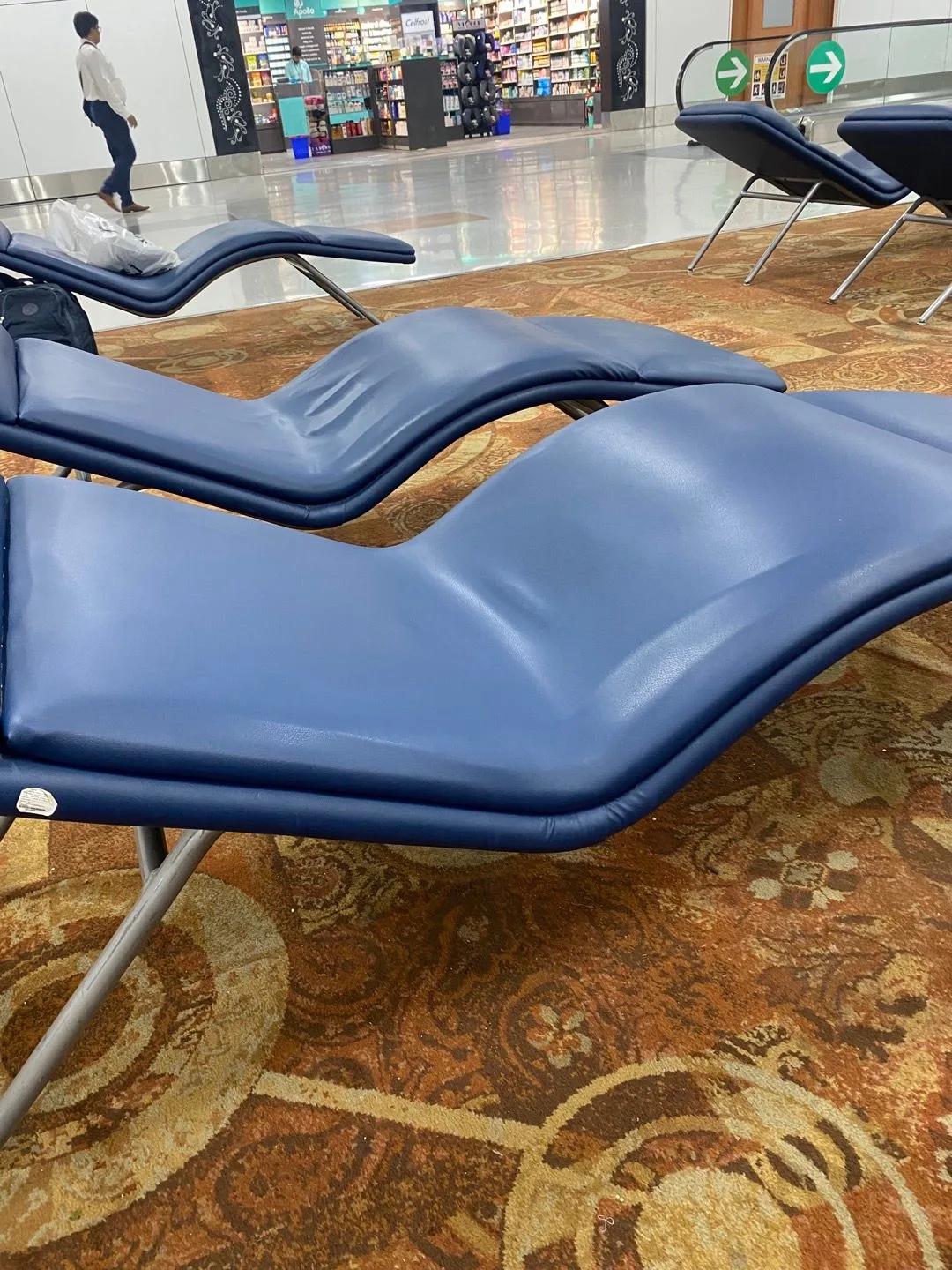
Will I manage to survive as a complete stranger? And when this trip ends, will I be able to answer the question I brought with me? Someone who looks Korean is sitting opposite me, and I wonder whether to start a conversation. Should I ask where they are going, whether they are headed to Kathmandu, or what their plans are afterward? For some reason, I feel generally dazed. I barely know what I am talking about right now. Perhaps I need some sleep. The person opposite me must be bored too. Fourteen hours! In the end, I give up on starting a conversation and try to sleep on a reclining bed beside Gate 8.
I am having a coffee in Thamel.
After arriving safely at Tribhuvan airport in Nepal, I spoke to some Koreans while we waited for our visas. There had been eight Koreans, including me, on the Air India flight from India to Nepal: two couples, two people visiting to volunteer, and one other solo traveler like me. Everyone set off for their destinations. Only the two solo travelers were heading to Pokhara without much of a plan. The other traveler said they were going by plane, so I followed along to at least find out the price. After getting lost, we finally found the domestic terminal, where we were quoted $120 for a flight to Pokhara. Between the price and my desire to see Thamel, I decided without much hesitation to take the bus instead.
As I headed toward the taxis, someone approached me and asked whether I was going to Thamel. I immediately knew it was time to haggle. When I asked the price, he said 800 rupees. At roughly ten Korean won per rupee, multiplying by ten makes the conversion easy. I was hoping for about 650 rupees, so I offered 500. He became indignant, saying the prepaid taxis over there charged 1,000 and that he would not go for less than 800. Fine, then don't, I thought, and started walking away. But he kept following me and asking how much I wanted to pay. Hadn't I already said 500? He said that was too much of a stretch. So I said I could go as high as 600, and he offered 650. There we go. Pretending I was doing him a favor, I said, 'Okay, 650,' and got into the taxi.
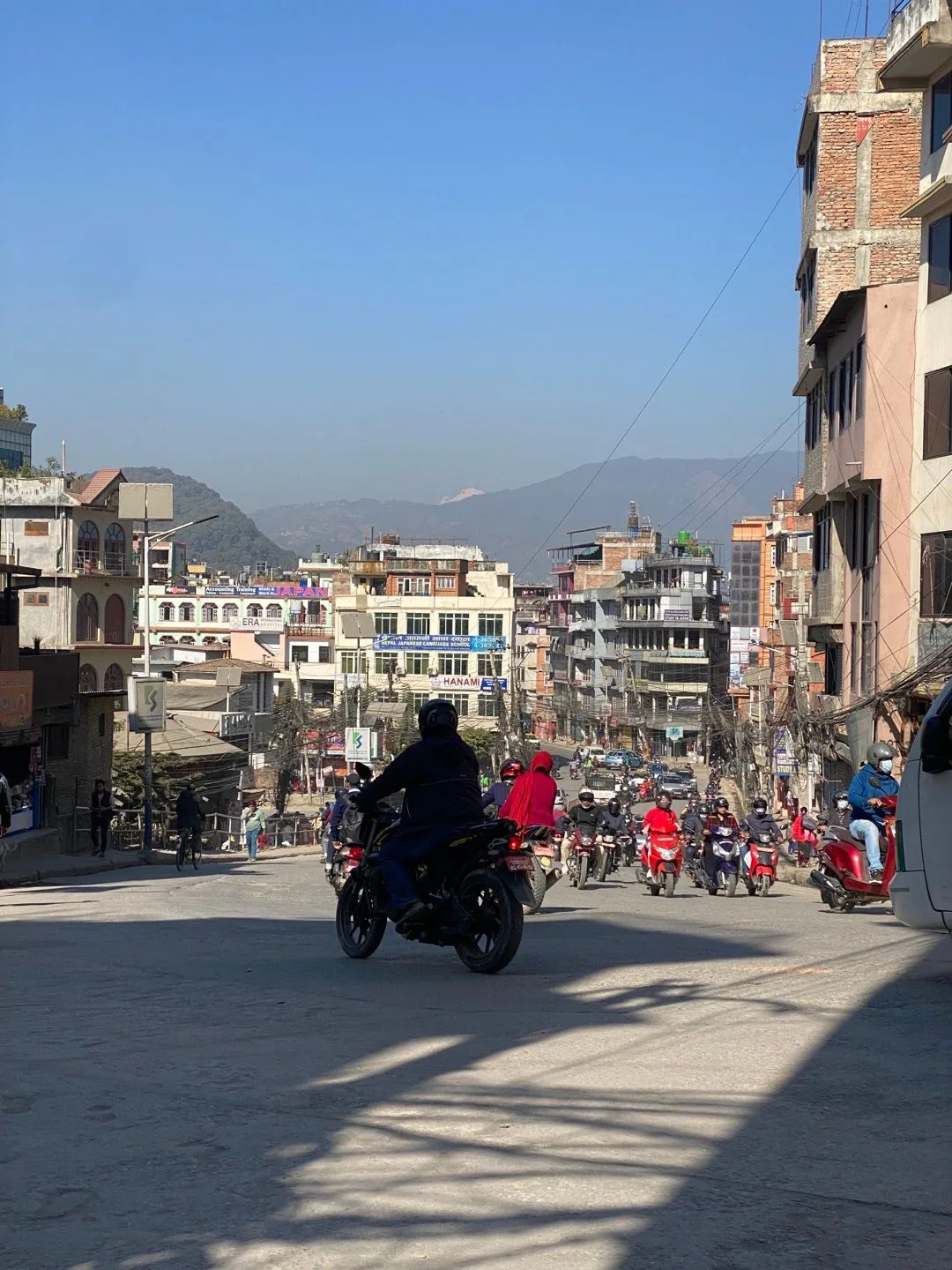
Throughout the ride, I kept reminding him that we had agreed on 650 rupees, in case he tried to change the price on arrival. Fortunately, I reached Thamel safely for 650. I felt rather pleased to have cleared my first quest. Thamel is the most famous neighborhood in Kathmandu, Nepal's capital. With Himalayan tourism accounting for a substantial share of income, trekking shops and tour agencies line its streets. Besides looking around, I needed to book a night bus to Pokhara, so I visited J-Bill, a travel agency said to cater mainly to Koreans. I did not actually know whether they sold night-bus tickets; I had simply gone there hoping to find out where to book one. As luck would have it, I could buy a ticket immediately for $15. Everything today is going more smoothly than expected. Perhaps all that worrying was worthwhile.
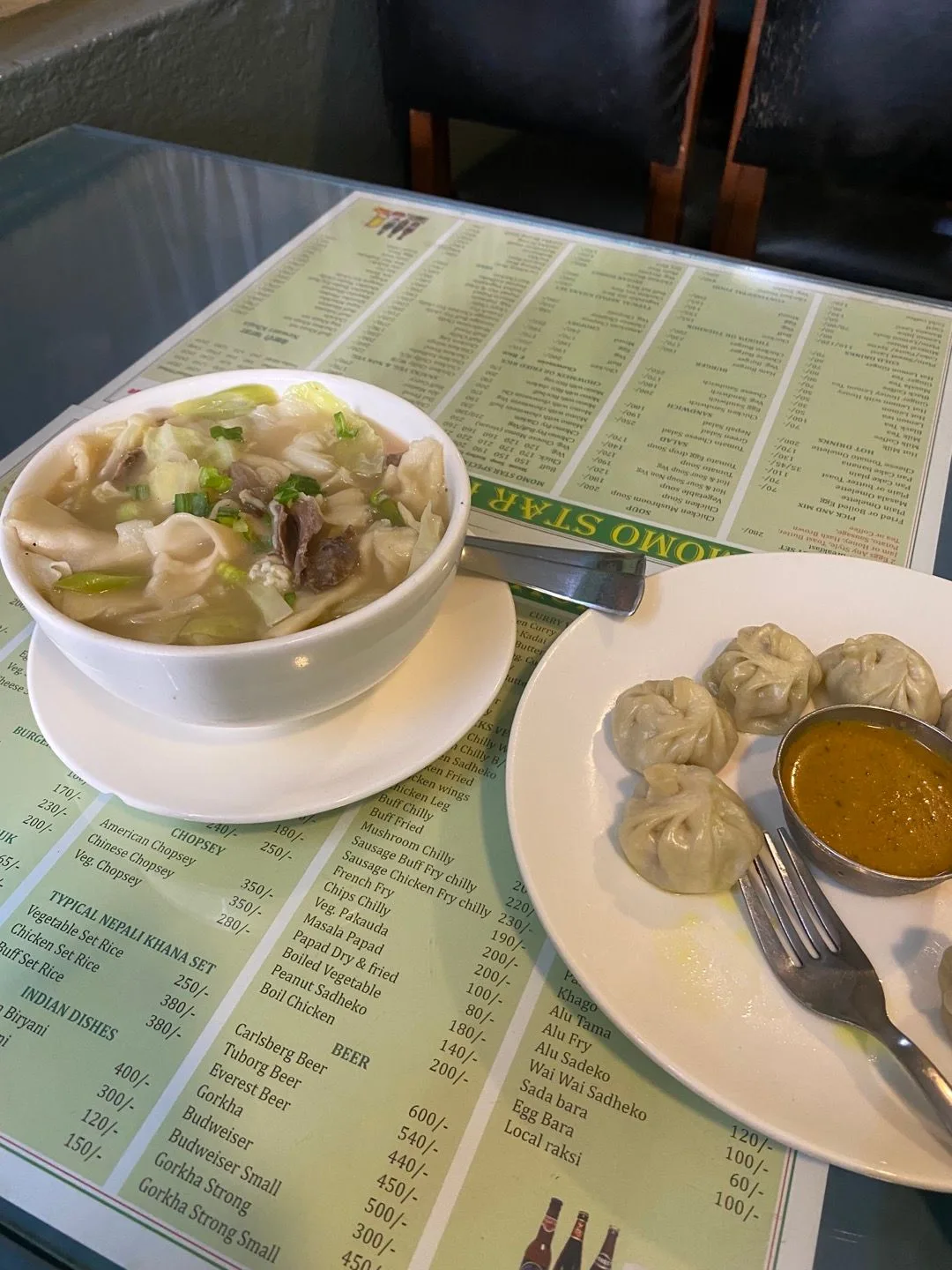
After booking the ticket, I stopped at a local restaurant called Momo Star. It was my first attempt at Nepali food, so I played it safe with the buffalo thenthuk and chicken momos I had researched beforehand. I made one mistake: I wanted fried momos but accidentally ordered steamed ones. Still, I ate them without any trouble. The food was fine, though not especially moving. It is now noon. But what am I supposed to do until seven this evening?
It is 4:25 p.m. I am glad I explored Thamel.
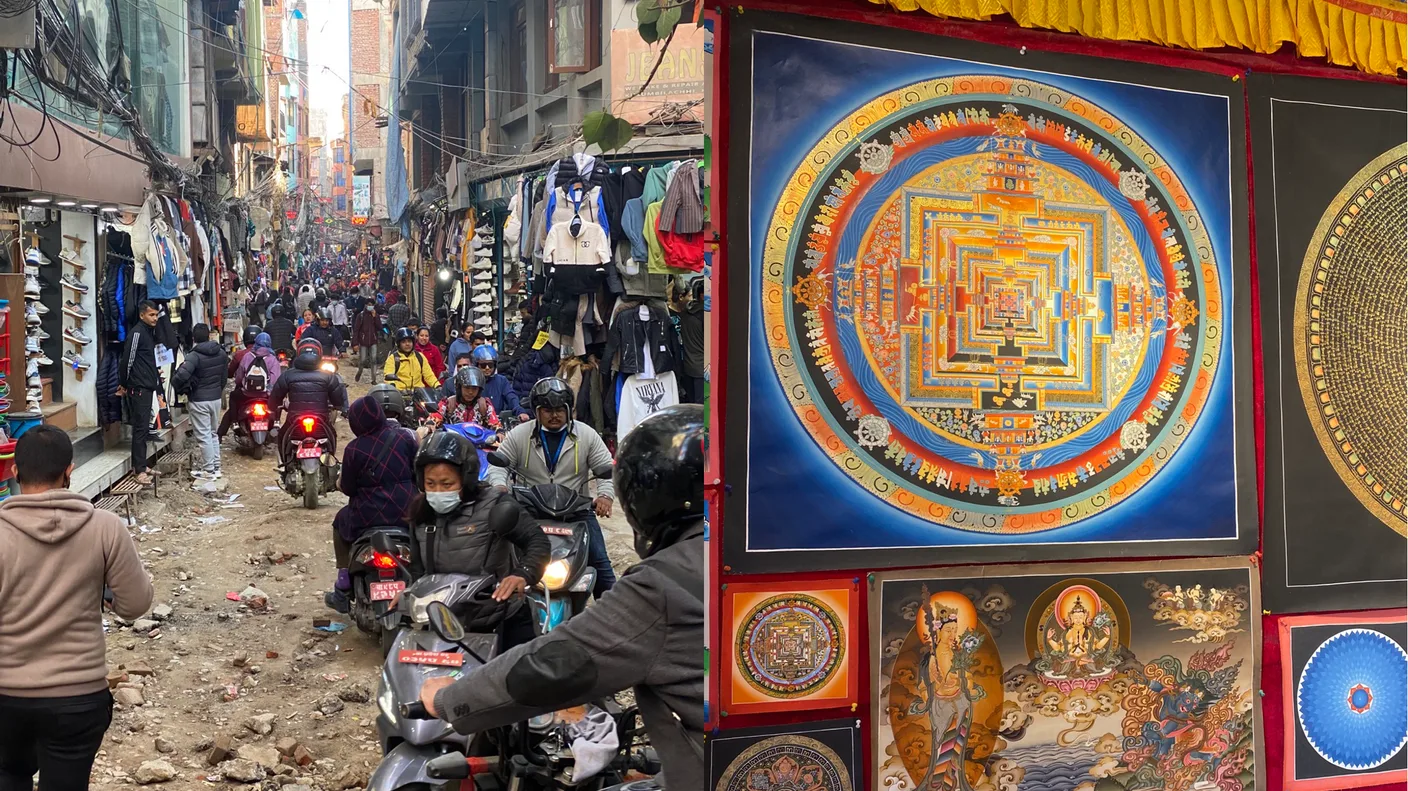
Perhaps I found a little peace in the most chaotic of streets. The scenery outside was even messier and more confusing than the tangled thoughts in my head. I wondered whether, paradoxically, that was what quieted the noise inside me. A street seller I happened to meet explained the mantra Om Mani Padme Hum and sold me a painting. I paid him for the story. I usually make a point of not giving in to sales pitches, but decided to think of it as payment for half an hour of conversation about the culture, and readily handed over 1,000 rupees. The mantra painting was probably a bonus. Though I still do not know where I will put it.
Even in this chaotic, untidy city, mobile data works everywhere, and people carry iPhones and Galaxy phones. They have Facebook Messenger, and Google Maps can help you find your way anywhere. The world suddenly looks different. It feels a little like using a new camera filter.
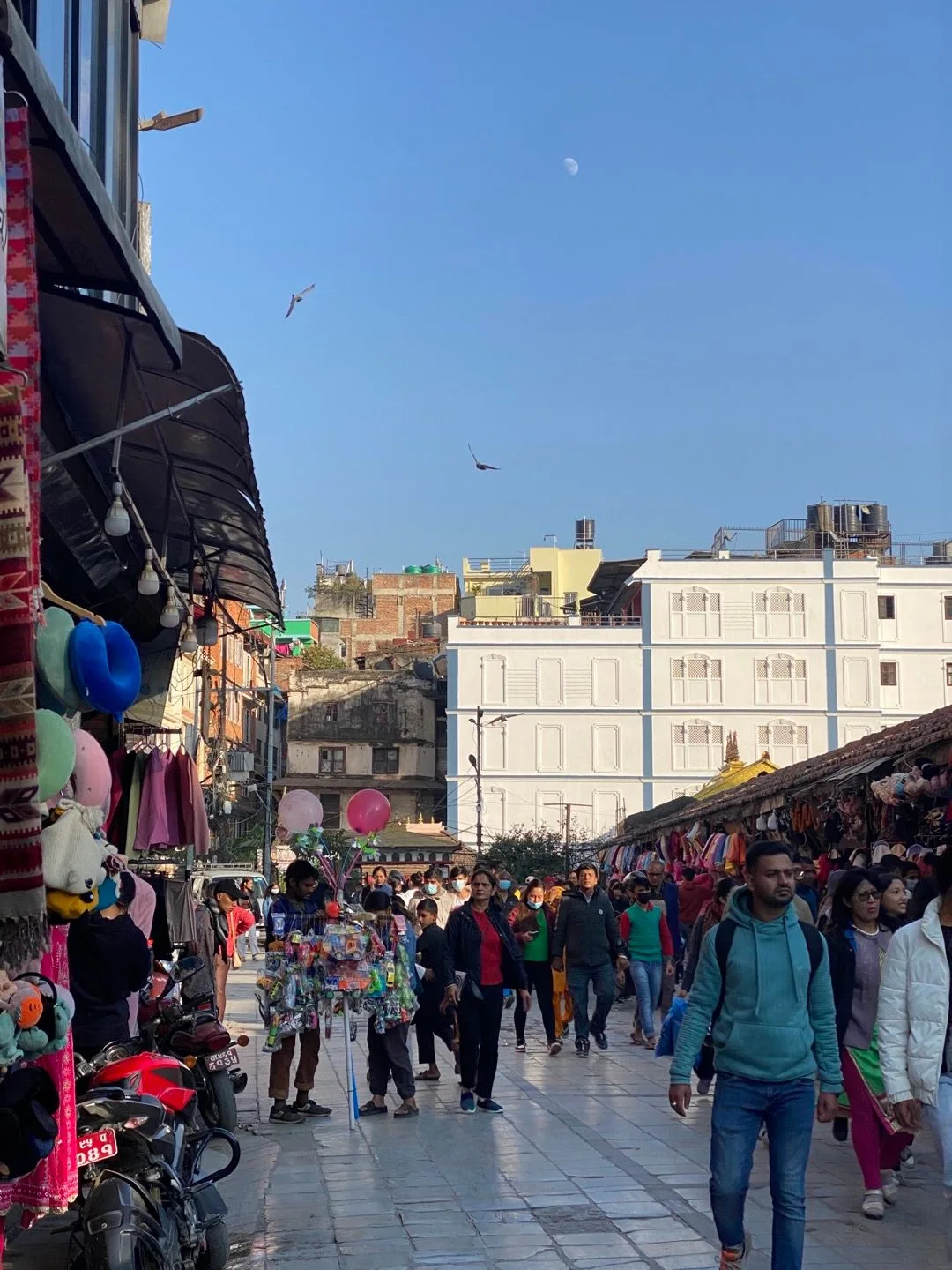
Every now and then, I remember that I have closed my business and am here taking pictures. It is another kind of shame: the feeling that I am not working hard at life. I am afraid others will look at me and wonder, 'Why is he doing that?' Quitting, giving up, the shame that follows, and the struggle to find a new direction. Writing this out makes one thing clear: if I remain trapped in ideas like 'quitting' and 'giving up,' I cannot move forward. I may still feel ashamed, frustrated, and flushed whenever I have to explain myself. But remaining imprisoned by these feelings does me no good at all.
Comments —